

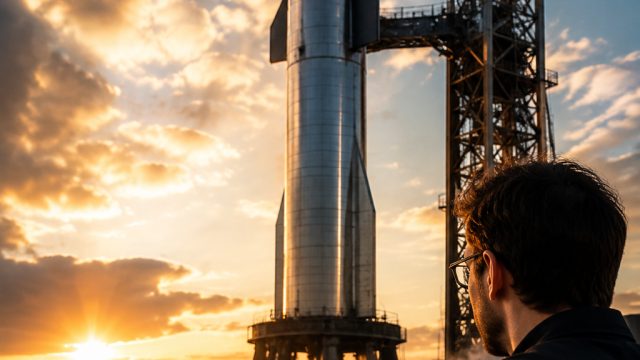
The recent developments surrounding SpaceX and its groundbreaking Starship rocket have reignited discussions about the intersection of artificial intelligence (AI) and space exploration. As David George from Andreessen Horowitz emphasizes the transformative potential of the Starship, we explore why this innovation is crucial for the future of AI in the cosmos.
The Promise of Rapid Reusability
One of the most significant advancements with SpaceX's Starship is its rapid reusability feature. This capability not only reduces costs associated with space travel but also increases the frequency of launches. With the vision of creating orbital data centers, the Starship could play a pivotal role in expanding AI computing capacity beyond Earth.
Why Rapid Reusability Matters
- Cost Reduction: Reusable rockets drastically cut down the expenses linked to sending payloads into space.
- Increased Launch Frequency: The ability to quickly prepare a rocket for multiple flights enhances the opportunities for scientific missions and commercial projects.
- Scalability: More launches mean more data and resources can be positioned in orbit, crucial for AI applications.
AI in Space: A Game-Changer for Data Processing
As we venture further into the cosmos, the need for advanced data processing becomes paramount. AI systems can analyze vast amounts of data in real-time, making them indispensable for missions that require immediate decision-making. The Starship's capacity will enable the establishment of orbital data centers equipped with AI technologies, revolutionizing how we manage data collected from space.
The Role of AI in Space Missions
- Autonomous Operations: AI can facilitate the autonomous operation of spacecraft, reducing the dependency on ground control.
- Data Optimization: AI algorithms can efficiently parse through collected data, identifying trends and anomalies faster than traditional methods.
- Predictive Analytics: Utilizing AI to forecast potential outcomes based on historical data can significantly enhance mission planning and execution.
Implications for Global Technology Trends
The advancements of SpaceX's Starship resonate beyond the realm of space exploration. They coincide with a larger trend of integrating AI into various sectors, including manufacturing, healthcare, and logistics. This cross-pollination of technology can lead to innovations that benefit life on Earth while preparing for future interplanetary ventures.
How This Affects Various Industries
- Supply Chain Management: Improved data analytics and forecasting through AI will streamline processes and reduce waste.
- Healthcare Innovations: Enhanced data processing capabilities can expedite research and improve patient care.
- Manufacturing Efficiency: AI-driven predictive maintenance can minimize downtime and optimize production.
Conclusion: Embracing the Future with SpaceX
As SpaceX's Starship prepares to redefine space travel with its innovative technology, the implications for AI are profound. The establishment of orbital data centers will not only enhance our capabilities in space but also spur significant advancements in AI applications across various industries on Earth. As we stand on the brink of this exciting frontier, the integration of advanced technologies like AI in space exploration is not just a possibility—it’s an imminent reality.