

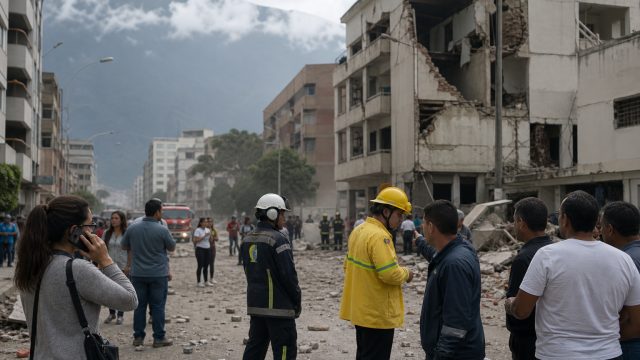
On Wednesday, Venezuela experienced a significant earthquake that rattled the capital city, Caracas, causing widespread concern among its residents and prompting questions about emergency preparedness and response. This seismic event not only impacted the buildings and infrastructure but also raised significant issues for local businesses and the economy at large.
The Earthquake: What Happened?
According to the geological reports, the earthquake struck in the late afternoon, measuring a magnitude that was felt as far away as neighboring countries. Buildings swayed, and residents fled into the streets, fearing aftershocks. Fortunately, there were no immediate reports of severe injuries, but the psychological impact on the population is expected to be profound.
Immediate Effects on Infrastructure
- Cracks appeared in buildings, prompting evacuations.
- Transportation systems experienced delays due to safety inspections.
- Emergency services were activated to assess damage and offer assistance.
Community Response and Resilience
The community response has been commendable, with local organizations and government bodies collaborating to ensure safety and provide relief to those affected. Residents have shown resilience in coming together to support each other during this crisis.
Impact on Local Economy
With a history of economic instability, the earthquake poses additional challenges for local businesses already struggling to survive. Shop owners reported significant losses due to forced closures for safety inspections and repairs. The risk of further earthquakes could deter investment and adversely impact market confidence.
Business Adaptation Strategies
In light of these challenges, businesses are urged to consider strategic adaptations:
- Enhancing disaster preparedness plans
- Investing in resilient infrastructure
- Engaging in community support programs
The Importance of Preparedness
This recent seismic event serves as a stark reminder of the importance of emergency preparedness. Authorities are now under pressure to implement better building codes and disaster response strategies to protect citizens and their livelihoods.
Emergency Response Measures
Immediate measures being discussed include:
- Strengthening building regulations to withstand seismic activity.
- Training emergency responders and community volunteers in disaster response.
- Creating awareness programs about earthquake preparedness.
Looking Ahead: A Call to Action
As Venezuela grapples with the aftermath of this earthquake, it is vital for businesses, governments, and communities to come together. The call for enhanced planning, community support, and public education on safety measures cannot be overstated.
Conclusion
The recent earthquake in Venezuela has highlighted vulnerabilities in infrastructure, community resilience, and economic stability. As citizens recover, it is crucial to foster a culture of preparedness and collaboration to mitigate the risks of future seismic events. By taking proactive measures, there is hope for a stronger, more resilient Venezuela.